
Coface has released the fourth edition of its survey on the payment practices of French companies. Conducted in June among 690 businesses, the study highlights a further deterioration in payment behavior. Over the past twelve months, 89% of companies reported experiencing late payments, while the average payment delay has risen to 41.2 days. Micro-enterprises remain the most exposed, both because of the length of delays and their consequences for cash flow.
Key figures
- 89% of French businesses experienced late payments in 2026.
- Average payment delays reached 41.2 days, increasing to 46 days for micro-enterprises.
- 58% of micro-enterprises describe the impact of late payments on their cash flow as “very significant” or “critical.”
- 43,282 insolvencies were recorded during the first seven months of 2026, representing a 6% increase year-on-year.
Late payments reach unprecedented levels
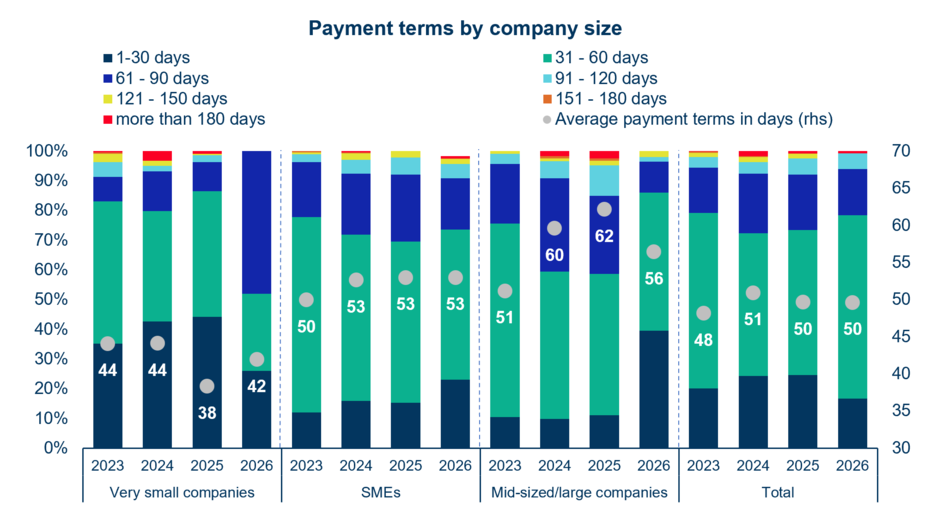
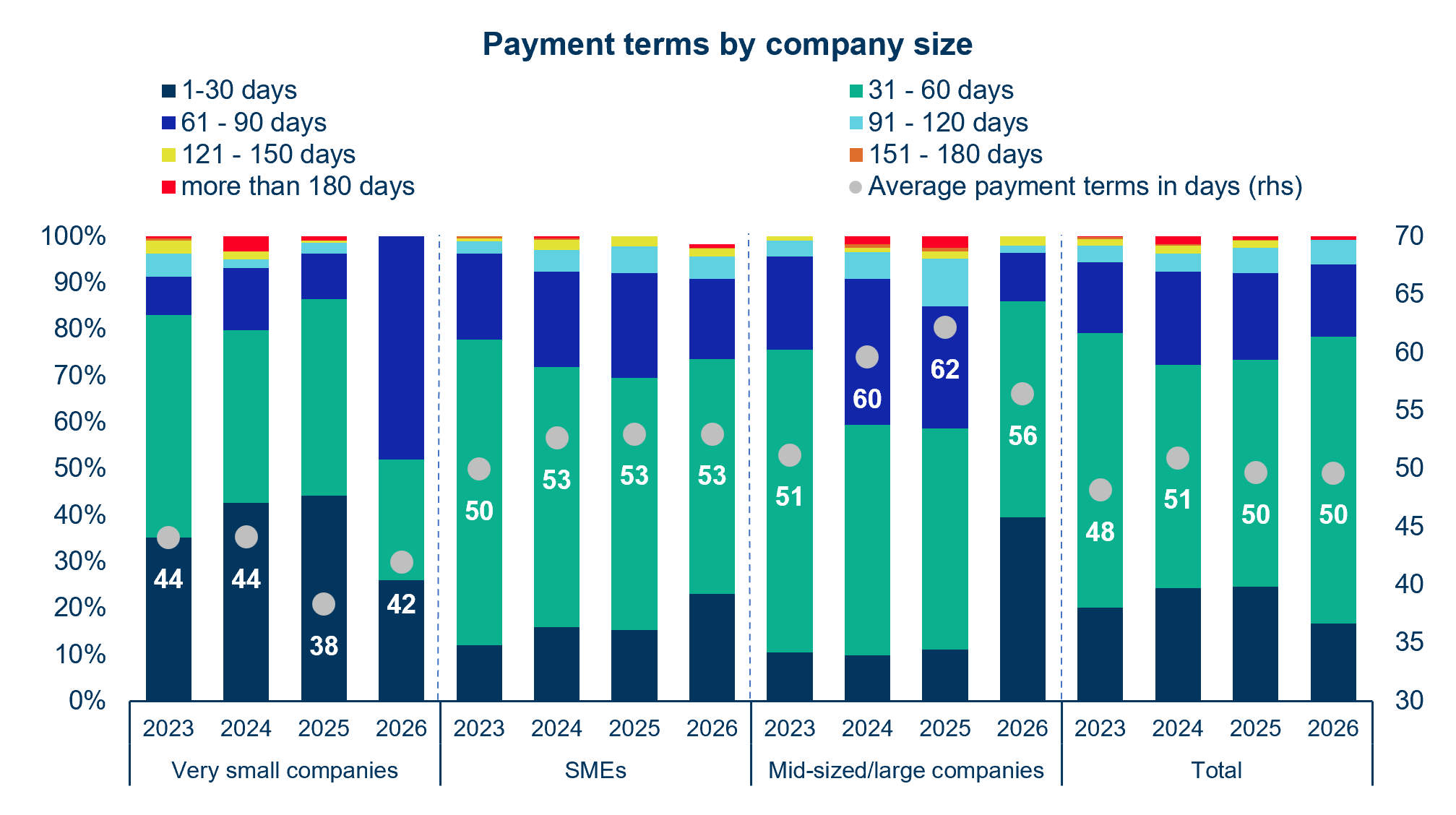
Providing customers with payment terms remains standard practice in France. Nearly all businesses (97%) grant payment periods, with an average term remaining stable at 50 days. This timeframe remains higher than in Germany (31 days), although it is now lower than in Poland (53 days) and the United Kingdom (57 days).
Data used for the graph in .xlsx format
When looking specifically at late payments, which provide a particularly useful indicator of economic conditions, the warning signs are becoming more pronounced. In 2026, 89% of French companies reported payment delays, compared with 86% in 2025, 85% in 2024 and 82% in 2023. This proportion is above the levels recorded in Germany (81%), Poland (64%) and China (86%), while matching the figure observed in the United Kingdom (89%).
Longer payment delays are increasing pressure on cash flow
The average length of payment delays has continued to rise, reaching 41.2 days, up from 39.5 days in 2025 and 37.6 days in 2023. Micro-enterprises are the most affected, recording an average delay of 46 days, compared with 39 days for SMEs and 36 days for mid-sized and large companies.
Beyond the increase in duration, the financial consequences of these delays are becoming more severe. A total of 58% of micro-enterprises now consider the impact on their cash flow to be either “very significant” or “critical,” compared with 40% of SMEs and 26% of medium-sized and large enterprises. Respondents identified their customers' financial difficulties as the primary cause of late payments (47% of responses). Organizational issues ranked second (21%), followed by intentional payment delays that were not linked to financial constraints (19%).
Insolvencies continue to rise
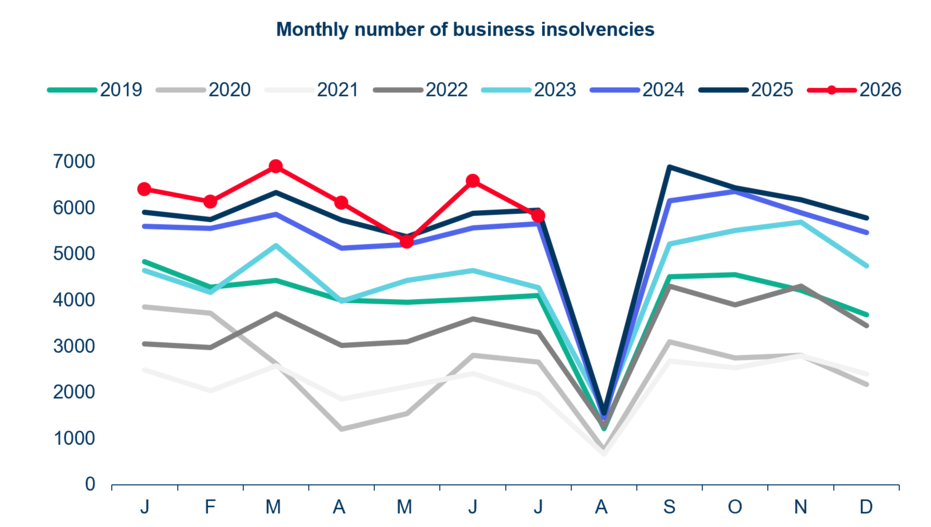
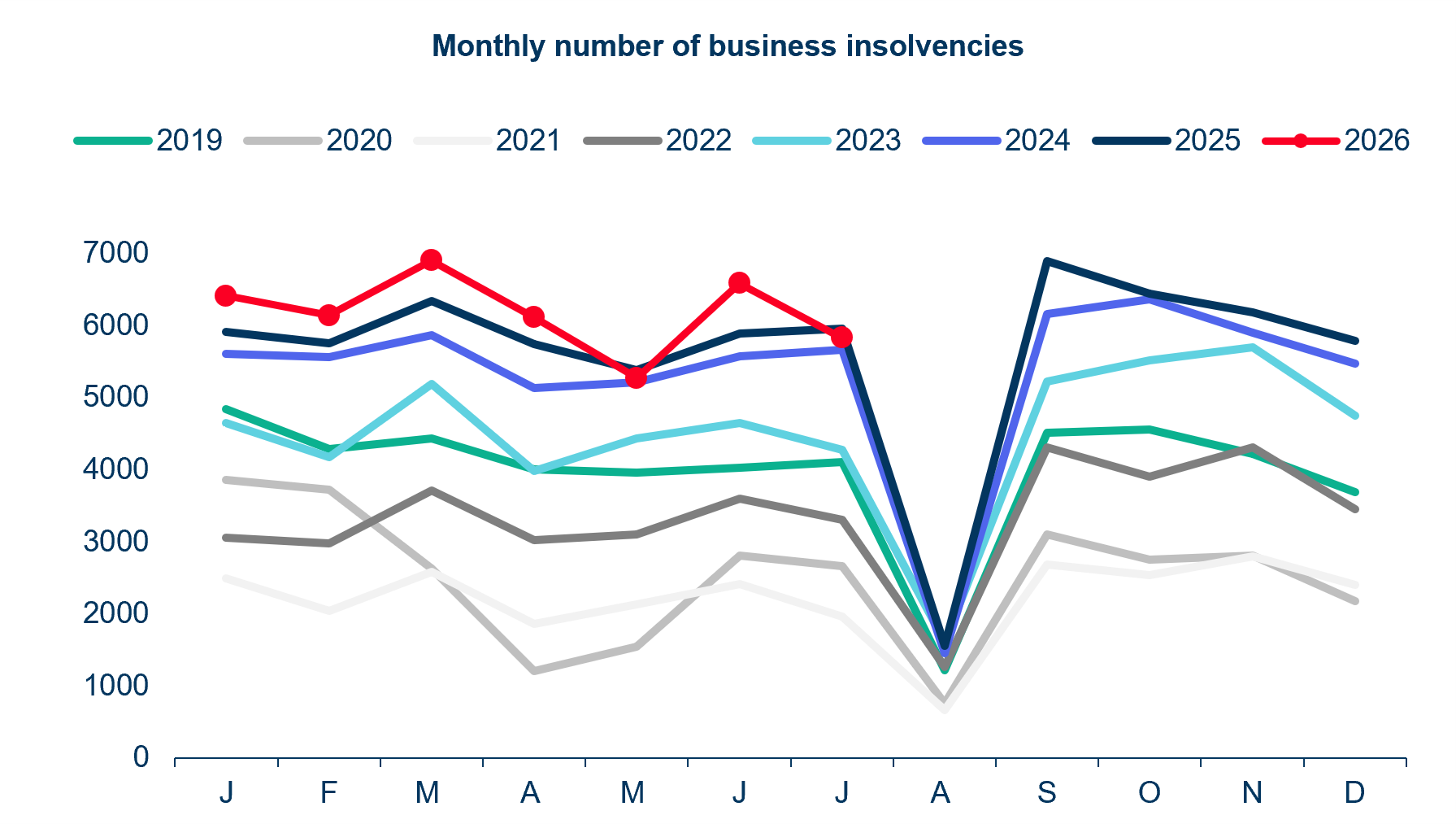
The worsening payment environment is occurring alongside a sustained increase in business insolvencies. Since the end of 2023, insolvency levels have remained significantly above those seen before the Covid-19 pandemic, and the trend has continued throughout 2026. During the first seven months of the year, 43,282 insolvencies were recorded, representing a 6% increase compared with the same period last year and a 46% rise compared with 2019. The sharpest increases were observed in business services (+12%), the food and agri-food sector (+11%), and the automotive industry (+8%). Although micro-enterprises account for more than 90% of insolvency cases, larger organizations have also been affected. Between July 2025 and June 2026, 64 mid-sized and large companies entered insolvency proceedings, compared with just 27 in 2019.
Against this backdrop, €3.6 billion in supplier debt was affected during the first seven months of the year, impacting nearly 160,000 jobs. Coface expects insolvencies to increase by 7% in 2026, followed by a further 9% rise in 2027.
Data used for the graph in .xlsx format
Businesses enter 2027 with declining confidence
In an already challenging environment, companies expect conditions to deteriorate further. More than half (56%) anticipate a decline in their business activity in 2027, compared with 49% a year earlier, while only 9% expect an improvement. Businesses identify the French political and social environment as their main source of concern, ahead of geopolitical tensions and fluctuations in raw material prices.
This cautious outlook is also influenced by external pressures that are already affecting companies. More than three-quarters of businesses with direct trade relationships with the United States report being impacted by US tariff measures. Among them, 32% have been forced to reduce margins, while 27% have experienced a decline in exports. At the same time, tensions in the Middle East and disruptions in the Strait of Hormuz have affected 84% of surveyed businesses, mainly through rising operating costs. These effects have been particularly significant in industrial sectors such as chemicals.
The widespread occurrence of late payments is no longer merely an indicator of tensions between businesses. It is becoming a factor that undermines their cash flow, particularly for the smallest organizations.
In an uncertain economic and political environment, the lengthening of payment delays will ‘fuel a rise in insolvencies in 2027’.
said Carine Pichon, Managing Director for Western Europe and Africa at Coface.
> Learn more on the Late payments in France by downloading the full study.


